There’s a saying in the bourbon world: “If it burns, it’s working.”
But here’s the truth — that’s not always the case.
Over the past decade, barrel proof and cask strength bourbons have exploded in popularity. They’re powerful, punchy, and unapologetically raw — straight from the barrel with no dilution. They promise “authenticity” and “flavor in full force.” But does higher proof always mean better bourbon? Not necessarily.
Let’s pour into why proof is only part of the story, and how to find the sweet spot that works for you.
The Rise of Barrel Proof Bourbon
Once upon a time, nearly all bourbon was proofed down before bottling. 80–100 proof was the standard — smooth, approachable, and built for easy sipping. Then along came distilleries like Booker’s and Elijah Craig Barrel Proof, proving that uncut bourbon could be both powerful and elegant.
Collectors loved it. Enthusiasts chased it. Suddenly, barrel proof became the badge of honor — the “real” bourbon experience. But while these bottles often deliver some of the most intense and rewarding pours out there, they’re not automatically superior.
Barrel proof is like volume on a stereo: crank it too high, and you might miss the music.
Proof vs. Flavor: What’s Really in the Glass
The proof number tells you alcohol content — but not balance.
Barrel proof bourbons often hit 120–135 proof, compared to a more common 90–100. That extra strength carries big, bold notes of spice, oak, and heat. But it can also overpower the subtleties — the caramel, vanilla, fruit, or floral notes that make bourbon special.
A truly great bourbon isn’t defined by its proof; it’s defined by harmony. You want the ethanol and the flavor to dance, not fight.
The magic is in how those flavors unfold. Some high-proof bourbons stay complex and drink “below their proof.” Others? They’ll singe your eyebrows off.
Water Isn’t the Enemy
One of the best-kept secrets in bourbon tasting: don’t be afraid to add a few drops of water.
Adding water to a barrel proof bourbon can open up aromas, soften edges, and reveal layers that were hidden under the heat. You’re not “ruining” the whiskey — you’re unlocking it.
Try this experiment:
- Pour a neat dram of something barrel proof, like Stagg Jr. or Booker’s.
- Take a small sip neat.
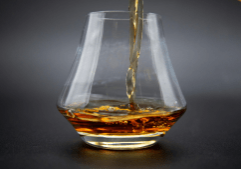
- Then add a few drops of water and wait 30 seconds.
- Smell and taste again.
You’ll notice new sweetness, different spices, or even fresh fruit notes emerge. Proof isn’t a contest — it’s a tool. The right proof is the one that brings the most flavor to your palate.
Temperature, Glassware, and Your Palate Matter
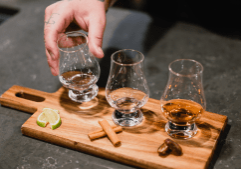
A 130-proof bourbon will hit differently in a warm room than in a cool one. Temperature affects volatility — the warmer the whiskey, the more alcohol vapors jump out of the glass. If you’re overwhelmed by ethanol, try chilling your Glencairn slightly or letting the bourbon sit for a few minutes before sipping.
Glassware also changes everything. A wide-mouth glass like a rocks glass dissipates alcohol faster, softening the nose. A narrow Glencairn concentrates it. Play around until you find your balance.
And remember: everyone’s palate is different. What burns for one person might be butter-smooth to another. There’s no “right” proof — just what’s right for you.
Don’t Be Fooled by the Label
Marketing plays a huge role in the barrel proof craze. The words “Cask Strength,” “Full Proof,” or “Uncut” look and sound impressive, and yes — sometimes those bottles are absolute monsters in the best way.
But some distilleries proof down their whiskey for good reason. A well-crafted 94-proof pour like Weller 12 or Eagle Rare can outperform a 130-proof bottle on taste and balance any day.
It’s not about heat. It’s about harmony.
A Few Barrel Proofs Worth Exploring (and Respecting)
If you’re diving into the deep end, here are a few bottles that show how barrel proof done right can be truly exceptional:
- Elijah Craig Barrel Proof (Heaven Hill): Bold, rich, and beautifully balanced — a masterclass in high proof finesse.
- Booker’s (Jim Beam): A powerhouse, but surprisingly layered and smooth for its proof.
- Stagg Jr. (Buffalo Trace): Explosive flavor with dark fruit, spice, and oak — when it’s on, it’s magic.
- Rare Breed (Wild Turkey): Consistent, accessible, and one of the best values in barrel proof bourbon.
- Maker’s Mark Cask Strength: A wheated wonder that brings sweetness to the high-proof category.
The key: respect the pour. Take your time. Experiment.
Final Pour
Barrel proof bourbon is a beautiful thing — it’s raw, honest, and lets you taste whiskey exactly as it comes from the barrel. But higher proof doesn’t automatically make it better.
The magic of bourbon is in the balance. Whether it’s an easy-sipping 90 proof or a fire-breathing 135, what matters most is how it drinks.
So don’t get caught up in the numbers. Pour slow. Taste intentionally. And remember: it’s not about proving anything — it’s about enjoying the journey, one sip at a time.
Cheers,
—Nick