Bourbon labels are packed with terms that sound important. Some of them are legally defined and tell you a lot about what’s in the bottle. Others are marketing language that can mean almost anything.
Knowing the difference makes you a smarter shopper. Here’s a plain-English guide to the terms you’ll see most often.
Bourbon
Let’s start with the basics. To be called bourbon, a whiskey has to meet a specific set of rules:
- Made in the United States
- At least 51% corn in the mashbill
- Aged in new, charred oak containers
- Distilled to no more than 160 proof
- Entered into the barrel at no more than 125 proof
- Bottled at 80 proof or higher
- Nothing added except water to lower the proof
That’s why a bottle like our Penelope 18 Year is labeled American Light Whiskey instead of bourbon. It was distilled to a higher proof and aged differently, so it falls into a separate category.
Straight Bourbon
“Straight” means the bourbon has been aged at least two years. If it’s aged less than four years, the label has to include an age statement. So if you see “straight bourbon” with no age listed, you know it’s at least four years old.
Age Statement
When a label lists an age, it refers to the youngest whiskey in the bottle. A 12 year bourbon like Weller 12 may contain older whiskey, but nothing younger than 12 years.
Bottled-in-Bond
This is one of the oldest quality guarantees in American whiskey, dating back to the Bottled-in-Bond Act of 1897. To earn the label, a whiskey must be:
- Made by one distiller at one distillery
- Distilled in a single distilling season
- Aged at least four years in a federally bonded warehouse
- Bottled at exactly 100 proof
If you’re looking for reliable quality at a fair price, bonded bottles are a great place to start.
Barrel Proof and Cask Strength
These terms mean the whiskey wasn’t cut with water after aging. You’re drinking it at or near the strength it came out of the barrel.
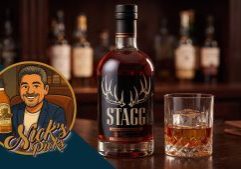
That’s why barrel proof bottles like Stagg 24C and Old Forester Single Barrel Rye Barrel Proof come in at unusual numbers like 128.9 and 129.4. Every batch or barrel lands a little differently. These bottles pack more flavor, but they also pack more heat, so a little patience or a few drops of water goes a long way.
Single Barrel
Every bottle comes from one individual barrel. No blending. That means each barrel can taste a little different, even under the same brand name. It’s part of the appeal, and it’s why store picks are such a big deal.
Small Batch
Here’s where things get fuzzy. “Small batch” has no legal definition. One brand might blend a dozen barrels, while another blends hundreds. It can point to quality, but on its own it doesn’t guarantee anything.
Batch Numbers
Many barrel proof releases use batch numbers to tell releases apart. Stagg, for example, uses the year followed by a letter. Stagg 24C is the third release of 2024. Other brands use their own systems, but the goal is the same: each batch is different, so the label tells you exactly which one you’re holding.
Non-Chill Filtered
Many whiskeys are chilled and filtered before bottling to remove compounds that can make the liquid cloudy at cold temperatures. Non-chill filtered bottles skip that step. Some drinkers believe it preserves more flavor and a richer mouthfeel.
Terms That Matter Most
If you only remember a few, focus on these: straight, bottled-in-bond, age statement, and barrel proof. They’re defined, they’re meaningful, and they tell you something real about the bourbon in the bottle. Everything else is worth reading, but take it with a grain of salt.